
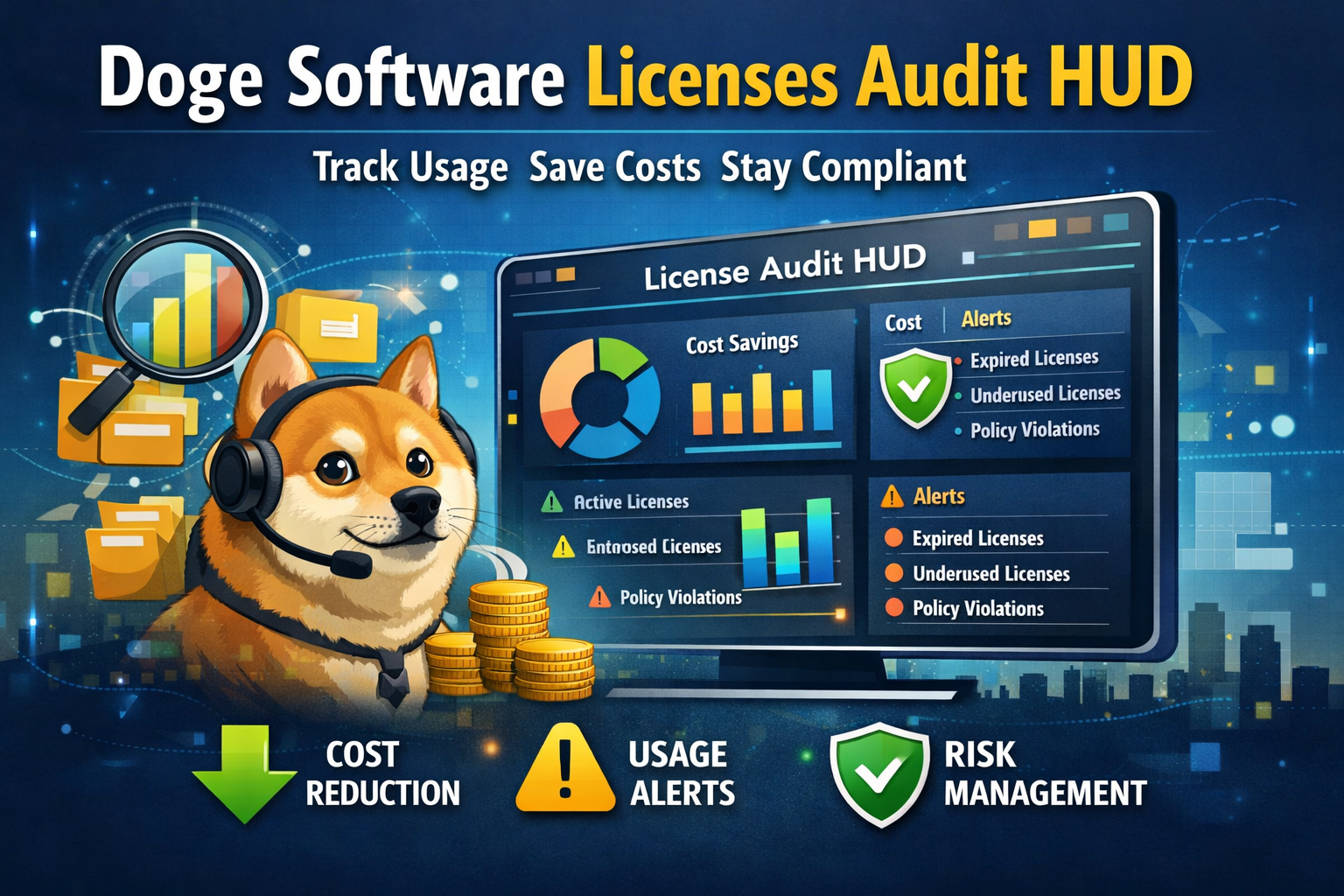
Doge Software Licenses Audit HUD: Simple Guide
Software is very important for modern organizations, many teams use many tools every day, these tools need licenses, licenses cost money every month or every year, many organizations do not track these licenses well, this causes waste and risk, the term Doge Software Licenses Audit HUD became popular after reports about a government audit at HUD, HUD means Housing and Urban Development, the audit showed that many software licenses were paid but not used, this created public debate BugsIsDead
The term also means a system idea, it means a real time dashboard that shows software license data, this dashboard helps teams see usage cost and risk at one place, this article explains Doge Software Licenses Audit HUD in simple words, it explains what it is how it works and why it matters
Why Software License Audits Are Important
Software Costs Grow Fast
Most software today uses subscription pricing, organizations pay again and again, if licenses are not tracked costs grow quietly
Common problems include
-
Licenses bought in bulk
-
Licenses left active after staff leave
-
Tools with the same purpose
-
No clear owner for licenses
-
Hard to read license rules
These problems stay hidden without good tracking
Audits Help Find Problems
Software audits check license usage and rules, traditional audits happen rarely, they are stressful and manual
Problems with traditional audits include
-
They are slow
-
They happen too late
-
They need much manual work
-
They cause panic before deadlines
A better method is needed
What Is Doge Software Licenses Audit HUD
Simple Definition
A Software Licenses Audit HUD is a live dashboard, it shows software license data in real time, it shows what software exists who uses it and if it follows rules, HUD means Heads Up Display, it means important data is always visible, this system does not replace audits, it makes audits continuous
Main Goals of a License Audit HUD
Core Goals
-
Show all software licenses clearly
-
Reduce wasted spending
-
Reduce legal risk
-
Improve control and planning
-
Support smart buying decisions
Extra Goals
-
Make audits easier
-
Help teams work together
-
Improve reports for leaders
-
Track changes over time
Key Parts of Doge Software Licenses Audit HUD
License Inventory
The first step is to list all licenses
This includes
-
Software name
-
Vendor name
-
License type
-
Number of licenses
-
Renewal date
Example License Inventory Table
| Field | Description |
|---|---|
| Software Name | Name of the tool |
| Vendor | Company that sells it |
| License Type | User or device |
| Quantity | Total licenses |
| Renewal Date | When it renews |
License Usage Tracking
The HUD shows how licenses are used
It tracks
-
Active users
-
Inactive users
-
Usage frequency
-
Last use time
This helps teams see real need
Compliance Rules Engine
Licenses have rules, the HUD checks these rules automatically
Rules may include
-
User limits
-
Location limits
-
Usage limits
-
Version limits
-
Open source duties
Example Compliance Status Table
| Status | Meaning |
|---|---|
| Compliant | Rules are followed |
| Risk | Possible issue |
| Violation | Rule broken |
| Review | Needs check |
Alerts and Warnings
The HUD sends alerts when action is needed
Alert types include
-
License expiring soon
-
No usage for long time
-
Too many users
-
Duplicate tools
-
Policy issues
Alerts help teams act early
Reports and History
The HUD creates reports automatically
Common reports include
-
Usage reports
-
Cost reports
-
Risk reports
-
Audit readiness reports
-
History logs
Example Report Types Table
| Report Type | Use |
|---|---|
| Usage Report | Find unused licenses |
| Cost Report | Control spending |
| Risk Report | Find rule issues |
| Audit Report | Prepare audits |
Analytics and Insights
The HUD also gives insights
It helps answer
-
Which tools cost most
-
Which licenses are unused
-
Where costs grow fast
-
Which vendors need review
This supports long term planning
System Integration
The HUD connects with other systems
Common connections include
-
HR systems
-
Identity systems
-
IT service tools
-
Cloud platforms
-
Development systems
This keeps data correct
How a License Audit HUD Works
Step One Discovery
The system scans devices and systems, it finds installed software and services
Step Two Identification
Found software is matched to license data
Step Three Evaluation
Usage is checked against rules
Step Four Display
Results show on the HUD screen
Step Five Action
Teams take action, they remove reassign or cancel licenses
Benefits of Using a License Audit HUD
Cost Benefits
-
Lower software spending
-
Better budget planning
-
Stronger vendor talks
Compliance Benefits
-
Fewer rule breaks
-
Less audit risk
-
Clear proof records
Work Benefits
-
Less manual work
-
Faster decisions
-
Better team alignment
Governance Benefits
-
Clear ownership
-
Strong control
-
Better oversight
Challenges to Expect
Common Challenges
-
Complex license terms
-
Old systems
-
Poor data quality
-
Team resistance
How to Handle Them
-
Start with high cost tools
-
Automate data collection
-
Train teams early
-
Set clear ownership
Lessons from the HUD Audit Story
The HUD audit discussion shows important lessons
-
Numbers need context
-
Licenses are not simple
-
Visibility improves action
-
Ongoing tracking works better than one time audits
The main lesson is clear visibility matters
Best Practices for License Audit HUD
Recommended Actions
-
Keep one license owner
-
Monitor licenses all the time
-
Connect HR and license systems
-
Review dashboards often
-
Use data before renewals
Frequently Asked Questions
What is Doge Software Licenses Audit HUD?
Doge Software Licenses Audit HUD is a real time dashboard that shows software license usage cost and compliance status in one place
Why is Doge Software Licenses Audit HUD important?
Doge Software Licenses Audit HUD is important because it helps organizations reduce wasted software spending and avoid license rule violations
Who should use Doge Software Licenses Audit HUD?
Doge Software Licenses Audit HUD is useful for government agencies businesses IT teams finance teams and compliance teams
How does Doge Software Licenses Audit HUD work?
Doge Software Licenses Audit HUD scans systems tracks license usage checks rules and shows results on a live dashboard
Does Doge Software Licenses Audit HUD replace audits?
Doge Software Licenses Audit HUD does not replace audits but makes audits easier by keeping data ready all the time
Can Doge Software Licenses Audit HUD reduce software costs?
Yes Doge Software Licenses Audit HUD can reduce software costs by finding unused licenses and helping teams cancel or reassign them
Is Doge Software Licenses Audit HUD only for government use?
No Doge Software Licenses Audit HUD can be used by private companies enterprises and organizations of any size
What types of software can Doge Software Licenses Audit HUD track?
Doge Software Licenses Audit HUD can track cloud software desktop software enterprise tools and open source components
Does Doge Software Licenses Audit HUD help with compliance?
Yes Doge Software Licenses Audit HUD helps with compliance by checking license rules and showing risks early
Is Doge Software Licenses Audit HUD hard to implement?
Doge Software Licenses Audit HUD is easier to implement when teams start with high cost software and use system integrations
Conclusion
Doge Software Licenses Audit HUD is more than a trending phrase, it shows a better way to manage software licenses, a real time license dashboard helps organizations see costs usage and risk clearly, it reduces waste and improves compliance, as software use grows license control becomes critical, a license audit HUD turns software licensing into a managed process not a hidden problem, organizations that adopt this approach gain control savings and confidence