
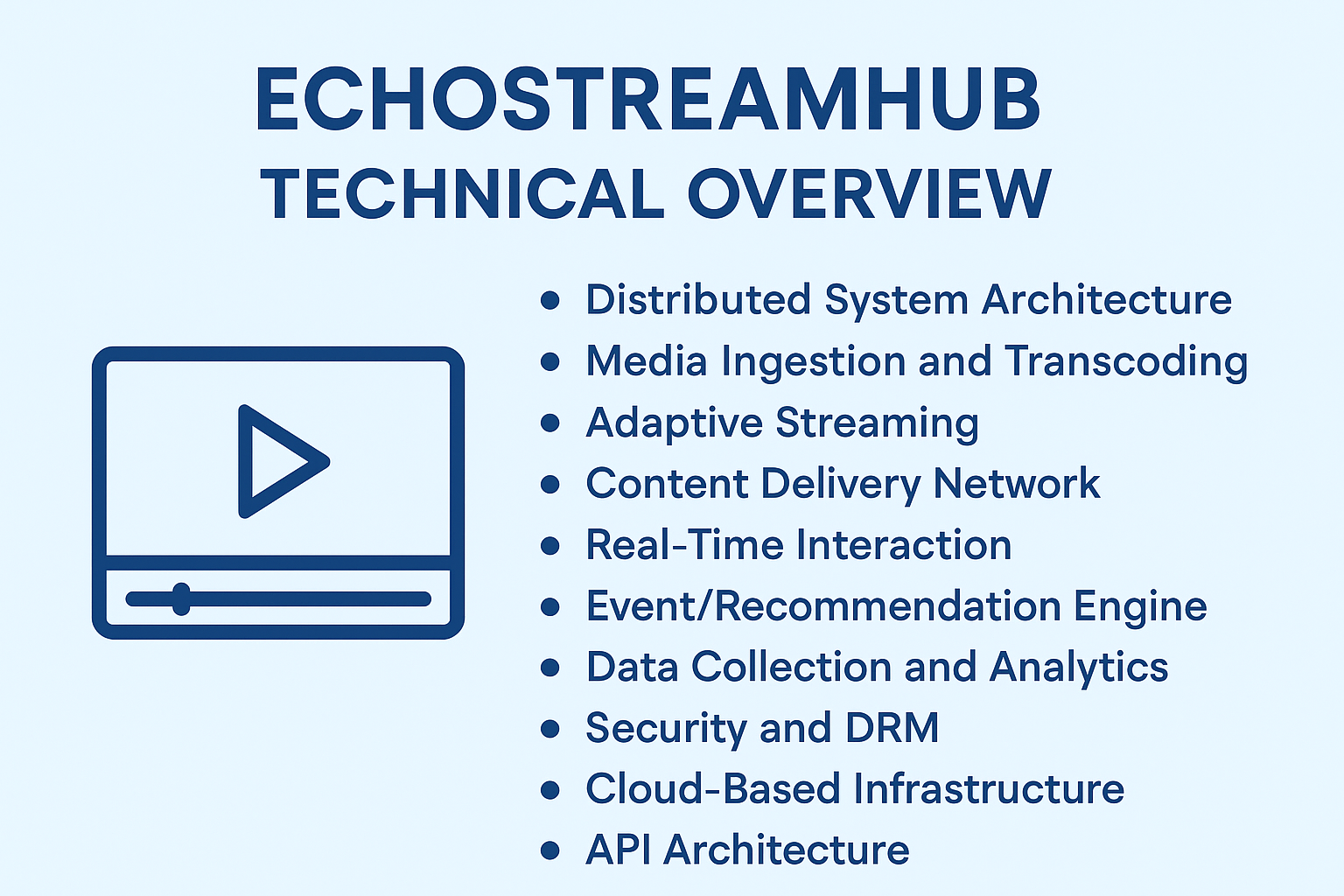
Echostreamhub: Technical Overview
Echostreamhub is a modern streaming platform, it is built using current internet technology, it supports live streaming and stored media, it focuses on speed stability and user interaction, the system is designed for large scale use, it works across many devices and networks SFlix Alternative
This article explains Echostreamhub from a technical view, it explains how the platform works, it explains system structure and data flow, it avoids marketing and business topics
Core Platform Design
Echostreamhub uses a distributed system design, this means tasks are split across many servers, each server handles a specific role, this improves performance and reliability
Main System Components
| Component | Purpose |
|---|---|
| Client Apps | Display content to users |
| API Layer | Handles requests and responses |
| Streaming Engine | Processes media |
| Interaction Service | Handles live actions |
| Data System | Stores events and metrics |
| AI Engine | Controls recommendations |
| Security Layer | Protects data and media |
| Cloud Platform | Provides scaling |
Each part works independently, each part can scale on demand
Streaming Engine Technology
Media Ingestion
Media ingestion is the first step, it accepts live and recorded content
Supported input methods include
-
Live camera streams
-
Screen capture streams
-
Uploaded video files
The system checks media format and quality, it prepares media for processing
Transcoding Process
Transcoding converts media into multiple formats, this helps playback on all devices
The system creates
-
Low quality streams
-
Medium quality streams
-
High quality streams
Each version is stored separately, the player selects the best version automatically
Adaptive Streaming
Adaptive streaming adjusts quality in real time, it depends on network speed and device power
Benefits include
-
Less buffering
-
Faster start time
-
Stable playback
This is done using segmented media files
Content Delivery Network
Echostreamhub uses global delivery servers, these servers are placed near users
CDN Functions
-
Stores cached video files
-
Reduces load on main servers
-
Improves response speed
-
Supports global access
When a user starts a stream, the closest server delivers the content
Client Side Playback System
Media Player Structure
The player is built using web standards, it supports streaming protocols, it handles buffering and errors
Player tasks include
-
Loading video segments
-
Switching stream quality
-
Syncing audio and video
-
Handling playback controls
Device Support
The platform supports many device types
-
Desktop computers
-
Mobile phones
-
Tablets
-
Smart TVs
A compatibility layer ensures correct playback, this layer adapts to screen size and hardware
Real Time Interaction System
Interaction Architecture
User interaction happens during playback, this requires low delay communication, the system uses persistent connections, messages are sent instantly
Supported interaction events include
-
Live chat messages
-
User reactions
-
Poll answers
-
Presence updates
Message Flow
| Step | Action |
|---|---|
| User sends event | Client sends message |
| Server receives | Validates event |
| Event broadcast | Sends to all viewers |
| Client update | Displays event |
This process happens in milliseconds
Data Collection System
Event Tracking
Echostreamhub tracks user activity, each action creates an event
Tracked events include
-
Play and pause
-
Stream join and exit
-
Interaction actions
-
Playback errors
Each event is timestamped, events are sent to the data system
Data Storage
The platform uses structured storage, data is stored in scalable databases
Storage features include
-
High write speed
-
Fault tolerance
-
Data replication
This ensures no data loss
Recommendation Engine Technology
Data Processing Pipeline
The recommendation engine uses user data, it analyzes behavior patterns
Processing steps include
-
Data ingestion
-
Feature generation
-
Model execution
-
Result delivery
Recommendation Logic
The engine selects content based on
-
Watch history
-
Interaction level
-
Session duration
Results are refreshed frequently, this improves accuracy over time
Recommendation System Table
| Stage | Function |
|---|---|
| Input | User events |
| Analysis | Pattern detection |
| Model | Preference scoring |
| Output | Content ranking |
Analytics and Monitoring
System Metrics
Echostreamhub monitors system health, metrics are collected continuously
Key metrics include
-
Stream start delay
-
Buffering rate
-
Error count
-
Server load
Monitoring Dashboard
| Dashboard | Purpose |
|---|---|
| Playback Stats | Stream quality |
| User Activity | Engagement level |
| Server Health | Resource usage |
| Error Logs | Issue detection |
Alerts are triggered automatically, this helps quick problem response
Security Architecture
User Authentication
The platform verifies each user, secure tokens are used
Authentication supports
-
Login sessions
-
Token expiration
-
Access validation
Authorization System
Access control defines permissions
Permissions include
-
Viewer access
-
Creator access
-
Admin access
Each request is checked before processing
Media Protection Technology
DRM System
Digital rights protection secures media
DRM features include
-
Media encryption
-
License validation
-
Secure playback control
Only approved users can play content
Secure Transmission
All data uses encrypted connections, this prevents interception
Security measures include
-
Encrypted streaming
-
Secure API calls
-
Protected storage
Cloud Infrastructure
Cloud Native Design
Echostreamhub runs on cloud systems, it uses container based services
Cloud benefits include
-
Auto scaling
-
Load balancing
-
Fast deployment
Reliability Features
The system avoids single failure points
Reliability methods include
-
Multiple server replicas
-
Health monitoring
-
Automatic restarts
This ensures high uptime.
API Architecture
API Structure
APIs connect system components
Types of APIs include
-
Content APIs
-
User APIs
-
Interaction APIs
-
Analytics APIs
Each API has defined endpoints
API Security
APIs require authentication, requests are rate limited
Security controls include
-
Token checks
-
Access rules
-
Logging
Performance Optimization
Latency Control
Low delay is critical for streaming
Optimization methods include
-
Edge caching
-
Fast startup logic
-
Stream preloading
Resource Management
System resources are managed dynamically
Optimization includes
-
Auto scaling services
-
Efficient encoding
-
Load aware routing
Logging and Observability
Log Types
The platform records system activity
Log categories include
-
Application logs
-
Streaming logs
-
Security logs
Logs help diagnose issues
Observability Tools
Observability includes
-
Metrics tracking
-
Distributed tracing
-
Alert systems
These tools improve system stability
Future Technical Growth
Echostreamhub is designed for expansion
Future improvements may include
-
Smarter AI models
-
Lower latency protocols
-
Advanced automation
-
Better fault recovery
The architecture supports change without rebuild
Frequently Asked Questions
What is Echostreamhub?
Echostreamhub is a modern streaming platform, it uses cloud based technology, it supports live and on demand media, it is built for speed stability and scale
How does Echostreamhub handle streaming?
Echostreamhub uses adaptive streaming technology, it changes video quality based on network speed, this helps reduce buffering, it improves playback stability
What streaming formats does Echostreamhub support?
Echostreamhub supports video and audio streaming, it works with live streams and stored content, it uses segmented streaming for smooth delivery
How does Echostreamhub reduce latency?
Echostreamhub uses global delivery servers, content is delivered from the nearest location, this reduces delay, it improves start time and responsiveness
How does Echostreamhub support real time interaction?
Echostreamhub uses persistent connections, it allows instant message delivery, live chat reactions and polls work in real time
What technology powers Echostreamhub recommendations?
Echostreamhub uses an AI based recommendation engine, it analyzes user behavior, it processes viewing and interaction data, it delivers personalized content results
How does Echostreamhub collect data?
Echostreamhub tracks system and user events, each action generates a data event, events are stored securely, they are used for analytics and optimization
Is Echostreamhub built on cloud infrastructure?
Yes Echostreamhub is cloud native, it uses scalable services, it supports automatic scaling, it ensures high availability
How does Echostreamhub handle system failures?
Echostreamhub uses multiple server instances, if one server fails another takes over, health checks run continuously, this maintains uptime
What security technologies does Echostreamhub use?
Echostreamhub uses encrypted connections, it applies access control rules, it protects media using DRM technology
Conclusion
Echostreamhub is a technically advanced streaming platform, it uses modern system design, it combines streaming interaction data and security, the platform relies on distributed services, it uses adaptive streaming and real time messaging, it applies AI driven personalization, this technical structure supports scalability and stability, it allows high performance streaming at global scale, Echostreamhub represents how modern streaming systems are built today