
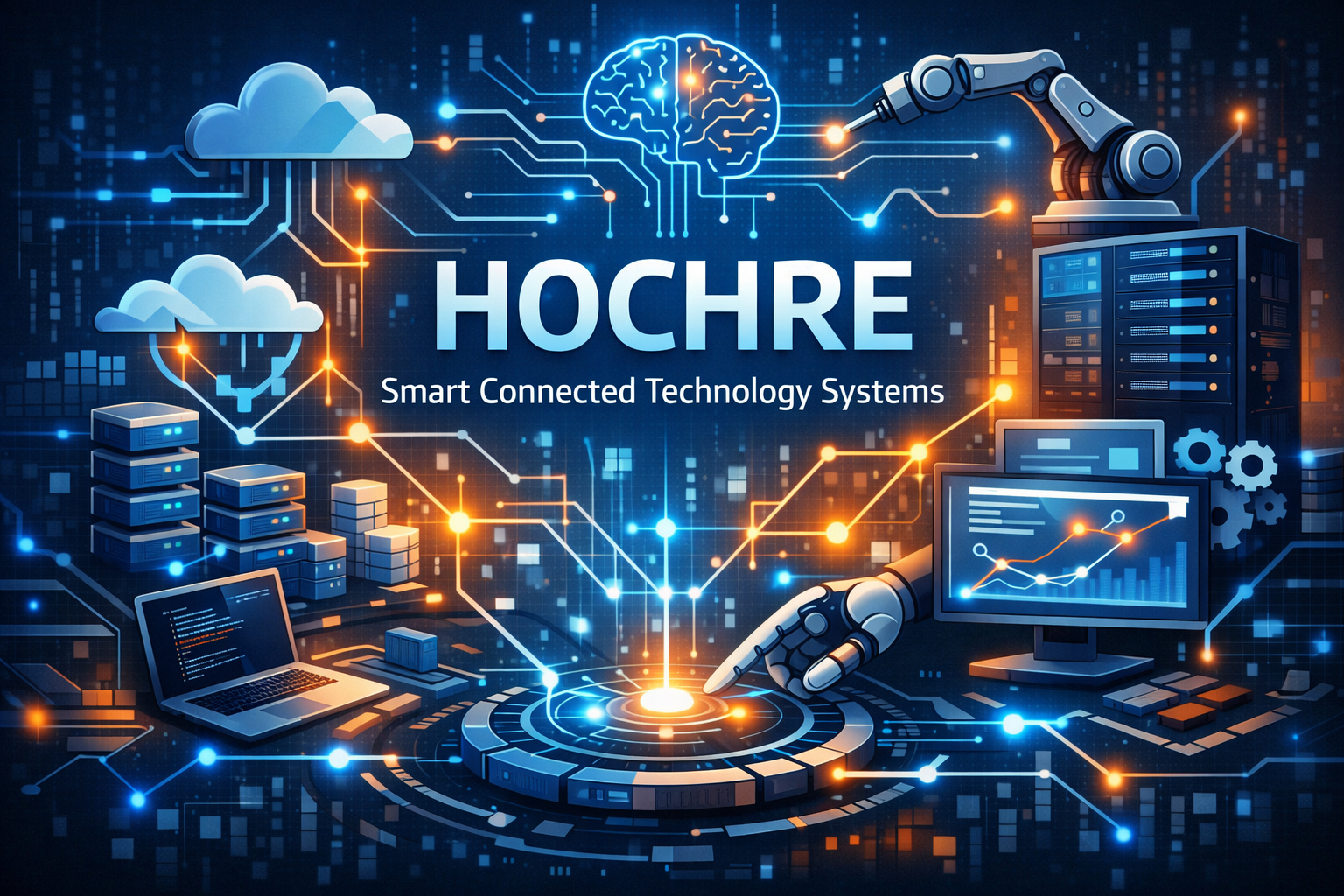
Hochre: A Simple Technology Framework for Smart and Connected Systems
Technology systems today are large and complex, companies use cloud servers data platforms automation tools and software services, many of these systems work alone and do not talk well with each other, this creates slow decisions higher costs and more errors, Hochre is a technology framework that helps fix this problem, Hochre focuses on connection automation and smart system behavior, it helps systems share data react faster and improve over time IngeBIM
This article explains Hochre only in a technology context, it covers system design data flow automation and future technology use
What Is Hochre In Technology
Hochre is a framework for building connected and adaptive technology systems
It focuses on three main ideas
-
Systems must share data
-
Systems must react to signals
-
Systems must improve with feedback
Hochre helps technology teams connect data intelligence and execution, instead of waiting for human action systems act automatically based on data
Why Hochre Is Important For Technology
Modern systems face many problems
Common Problems In Current Systems
-
Data is stored in many places
-
Decisions are slow
-
Automation is limited
-
Systems fail without warning
-
Teams work in silos
These problems reduce performance and increase risk
How Hochre Solves These Problems
-
Data moves in real time
-
Decisions trigger actions
-
Automation adapts to changes
-
Systems monitor themselves
-
Teams use shared signals
Hochre creates systems that respond instead of react
Core Ideas Behind Hochre
Hochre is built on simple but powerful ideas
Integration First
Systems must connect from the start
This includes
-
Data systems
-
Applications
-
Infrastructure
-
Automation tools
Connection is part of the design not an add on
Intelligence Everywhere
Hochre spreads intelligence across systems
Intelligence can exist in
-
Data pipelines
-
Applications
-
Automation engines
-
Infrastructure tools
This allows faster decisions
Adaptation Over Fixed Rules
Traditional systems use fixed rules, Hochre systems change behavior based on data
Examples include
-
Dynamic scaling
-
Smart alerts
-
Automatic recovery
Continuous Feedback
Every action creates data, that data improves future actions, Feedback allows systems to learn
Hochre System Structure
Hochre systems use layers, each layer has a clear role
Main System Layers
| Layer Name | Purpose |
|---|---|
| Data Layer | Collects and streams data |
| Intelligence Layer | Creates insights and signals |
| Control Layer | Manages workflows and rules |
| Action Layer | Executes system actions |
| Feedback Layer | Tracks system results |
Each layer talks to others using signals
Data Layer In Hochre
The data layer is the foundation
Key Features
-
Real time data flow
-
Event driven design
-
Shared data formats
-
High availability
Common Data Sources
-
Application logs
-
User activity
-
System metrics
-
External services
The goal is fast and clean data access
Intelligence Layer In Hochre
The intelligence layer turns data into signals
Types Of Intelligence
-
Rules engines
-
Prediction models
-
Pattern detection
-
Risk scoring
Responsibilities
-
Analyze incoming data
-
Detect problems early
-
Predict future behavior
-
Send signals to control systems
This layer supports decisions not actions
Control Layer In Hochre
The control layer connects intelligence to action
Key Functions
-
Workflow management
-
Event routing
-
Policy enforcement
-
Error handling
Typical Actions
-
Trigger automation
-
Block risky behavior
-
Start recovery flows
Control systems ensure safe execution
Action Layer In Hochre
The action layer performs tasks
Examples Of Actions
-
API requests
-
Database updates
-
Server scaling
-
Software deployment
-
Alert notifications
Actions must be fast reliable and traceable
Feedback Layer In Hochre
The feedback layer closes the loop
Types Of Feedback Data
-
Performance metrics
-
Error logs
-
System traces
-
User response data
Why Feedback Matters
-
Detect failures early
-
Improve automation rules
-
Tune system behavior
-
Support learning systems
Without feedback Hochre does not work
Technologies Used In Hochre Systems
It does not depend on one tool, it uses modern technology groups
Platform Technologies
-
Cloud infrastructure
-
Container platforms
-
Virtual networks
Data Technologies
-
Streaming systems
-
Data storage engines
-
Analytics services
Automation Technologies
-
Workflow engines
-
Policy systems
-
Event brokers
Success depends on coordination not tools
Use Cases Of Hochre In Technology
It works across many technology areas
Intelligent Digital Platforms
It enables platforms that
-
React to user behavior
-
Adjust services automatically
-
Reduce manual work
Examples include ecommerce systems and online services
IT Operations And Infrastructure
It improves operations by
-
Predicting failures
-
Scaling systems early
-
Fixing issues automatically
This reduces downtime and cost
DevOps And Software Delivery
It improves DevOps by linking
-
Code changes
-
System health
-
User impact
Deployments become safer and faster
Data Driven Automation
This automation adapts to context
Key features include
-
Signal based triggers
-
Learning workflows
-
Outcome based improvement
This is better than fixed scripts
Benefits Of Hochre For Tech Teams
Technical Benefits
-
Faster systems
-
Better reliability
-
Improved scalability
-
Strong observability
Business Benefits
-
Faster decisions
-
Lower cost
-
Better risk control
-
Higher system value
Challenges When Using Hochre
Technical Challenges
-
Legacy integration
-
Poor data quality
-
Complex event flows
-
Monitoring gaps
Team Challenges
-
Skill shortages
-
Resistance to change
-
Governance complexity
These challenges require planning
How To Start Using This
Simple Starting Steps
1 Map existing systems
2 Identify data gaps
3 Add event signals
4 Introduce basic automation
5 Measure results
6 Improve continuously
Start small and expand slowly
Future Of This In Technology
Technology systems are becoming more autonomous, it supports this future
Future Directions
-
Self healing systems
-
Smart infrastructure
-
Autonomous workflows
-
AI driven governance
it fits complex digital environments
Frequently Asked Questions
What is Hochre in technology?
It is a technology framework, it helps systems share data act automatically and improve with feedback, Hochre connects data intelligence and execution
Is it a software or a tool?
No it is not a tool, it is a system design approach, it works with existing technologies
Why is it important for modern systems?
It reduces system delays, it improves automation, it helps systems respond faster to changes and risks
How does it work?
It collects data, it analyzes signals, it triggers actions, it measures results, this cycle repeats continuously
Does it use artificial intelligence?
It can use artificial intelligence, AI is optional, architecture and data flow are more important
Can it work with cloud systems?
Yes it works very well with cloud platforms, it supports scaling automation and monitoring
Is it useful for DevOps teams?
Yes it improves DevOps, it connects deployments system health and user impact, this makes releases safer
Does it replace existing systems?
No it improves existing systems, it does not require full replacement
What problems does it solve?
It solves data silos slow decisions system failures and manual work
Is it hard to implement?
It can start small, teams can add it step by step, planning and monitoring are important
Who should use this?
This is useful for software teams platform engineers cloud architects and IT operations teams
What is the future of this?
This supports self healing systems smart automation and adaptive infrastructure. Its use will grow as systems become more complex
Conclusion
It is a technology framework that helps systems work together, it connects data intelligence and action, it focuses on automation adaptation and feedback, it does not add more tools, it improves how systems think and respond, as technology grows more complex Hochre provides a clear way to design smart connected and resilient systems, for teams building modern platforms it offers a strong foundation for the future